A Journey Through History: Witnessing Humanity’s Return to Lunar Space
Over the past ten days, four brave explorers have etched their names into the annals of space exploration, venturing farther from Earth than any humans before them on their remarkable journey to lunar space and back.
As a journalist covering this extraordinary mission, I witnessed every pivotal moment of this historic voyage: from the thunderous departure to the heart-stopping finale of their return to Earth.
The crew had assured us that astronauts remain remarkably composed on launch day. However, my own nerves told a very different story.
The Raw Power of Launch
My enthusiasm was overwhelming as the massive rocket ignited its powerful engines and soared toward the heavens. Standing near the countdown timer at the Florida launch facility with my colleagues was an experience that engaged every sense.
The brilliant white flames commanded absolute attention, while the thunderous sound waves took precious seconds to reach us. The sheer force of the launch reverberated through our bodies in an unforgettable way.
What struck me most profoundly was the realization that four human beings were secured atop this towering 98-meter rocket, beginning their quarter-million-mile odyssey to the Moon.
As the crew members – Reid Wiseman, Victor Glover, Christina Koch, and Jeremy Hansen – gazed down at their home planet from the vastness of space, Glover shared with the world: “Planet Earth, you look beautiful.”
Following an engine burn that propelled them away from Earth’s orbit, they embarked on their epic journey to our nearest celestial neighbor.
Live video feeds from their spacecraft revealed the cramped conditions the crew endured. They lived, worked, ate, and slept in a space roughly equivalent to a small van, with no privacy from each other or the millions following their every move.

Public attention focused particularly on their waste management system – a $23 million facility that experienced plumbing difficulties. During media briefings, reporters received detailed updates about the crew’s bathroom situation, including the deployment of emergency collection devices.
Mission Control Operations
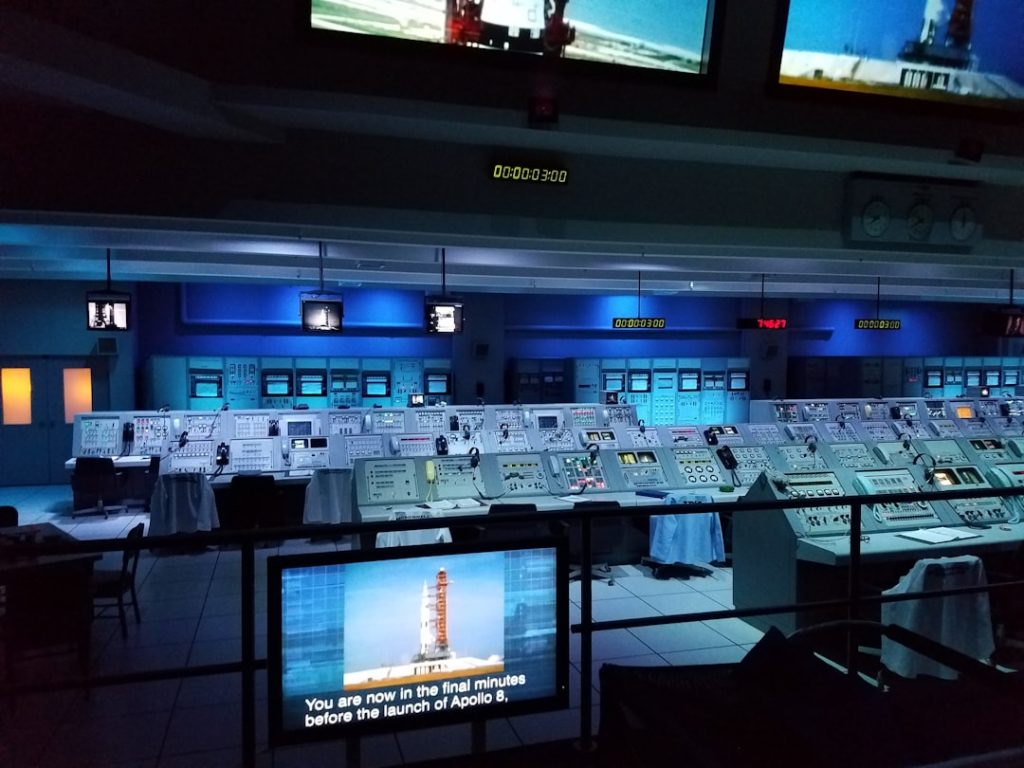
At the Johnson Space Center in Houston, we gained access to mission control – the operational heart of the entire endeavor. Teams of specialists monitored incoming data streams, tracking everything from navigation systems to life support functions.
This oversight proved crucial, as this marked the inaugural human flight for both the rocket and spacecraft systems. Such test flights inherently carry significant risks.
Speaking with Canadian crew member Jeremy Hansen during pre-launch quarantine highlighted these dangers. He revealed having discussed with his wife and three children the possibility that he might not return home.
Commander Reid Wiseman similarly shared that he had frank conversations with his two daughters about the mission’s risks. As a single father following his wife’s death six years prior, these discussions carried particular weight.
A Crater Named Carroll
As the spacecraft approached its destination and lunar features became visible through the windows, the crew identified a bright crater visible from Earth. They dedicated this formation to Reid’s late wife, Carroll.
This emotional moment brought tears to the entire crew as they embraced their commander. Back in Houston, mission control staff and our reporting team were equally moved by this touching tribute.
Everyone we interviewed at the space agency – from leadership to fellow astronauts, scientists, and engineers – demonstrated deep personal investment in this crew’s success.
Their mission exceeded all expectations. After surpassing Apollo 13’s distance record for human space travel, the crew continued their journey, ultimately reaching 252,756 miles from Earth while capturing thousands of photographs and audio recordings of the lunar surface.

The mission carried strong connections to the Apollo program, with recorded messages from veteran astronauts played during the flight. However, some questioned whether this represented mere nostalgia, given the estimated $93 billion investment in returning to a destination already visited decades ago.
Space agency leadership emphasized their intention to build upon Apollo’s legacy rather than simply repeat it. Future plans include lunar landings scheduled for 2028, establishment of a Moon base, and eventual human missions to Mars.
Critics question whether human exploration remains necessary when robotic missions can accomplish similar objectives. Agency officials maintain that exploration represents fundamental human nature, while acknowledging the inherent risks involved.
The Return Journey
The crew’s return to Earth presented their greatest challenge. Victor Glover described reentry as riding a fireball through the atmosphere, with the capsule experiencing temperatures reaching half the intensity of the Sun’s surface.
Observing this dramatic descent from mission control proved nerve-wracking, particularly during a six-minute communication blackout as the capsule approached Earth. Relief was palpable when a bright white dot appeared above the ocean and Wiseman’s voice confirmed successful contact.
The capsule’s gentle splashdown in the Pacific Ocean beneath massive parachutes marked the mission’s successful conclusion. Mission control erupted in celebration as thousands of project contributors celebrated bringing their colleagues safely home.
The crew acknowledges that processing their extraordinary experience will require considerable time. When asked what they would miss most about their journey, Christina Koch immediately mentioned the camaraderie and family-like bonds formed during their voyage.
These four individuals launched as relative unknowns and returned as household names. Their mission captivated global audiences, transporting millions away from earthbound concerns and allowing them to share in humanity’s greatest adventure.
If current ambitious exploration plans succeed and other nations follow suit, this represents just the beginning of a new era in human space exploration.
Photo by Ana Garnica on Unsplash
Photo by Bill Jelen on Unsplash
Photo by Channel 82 on Unsplash